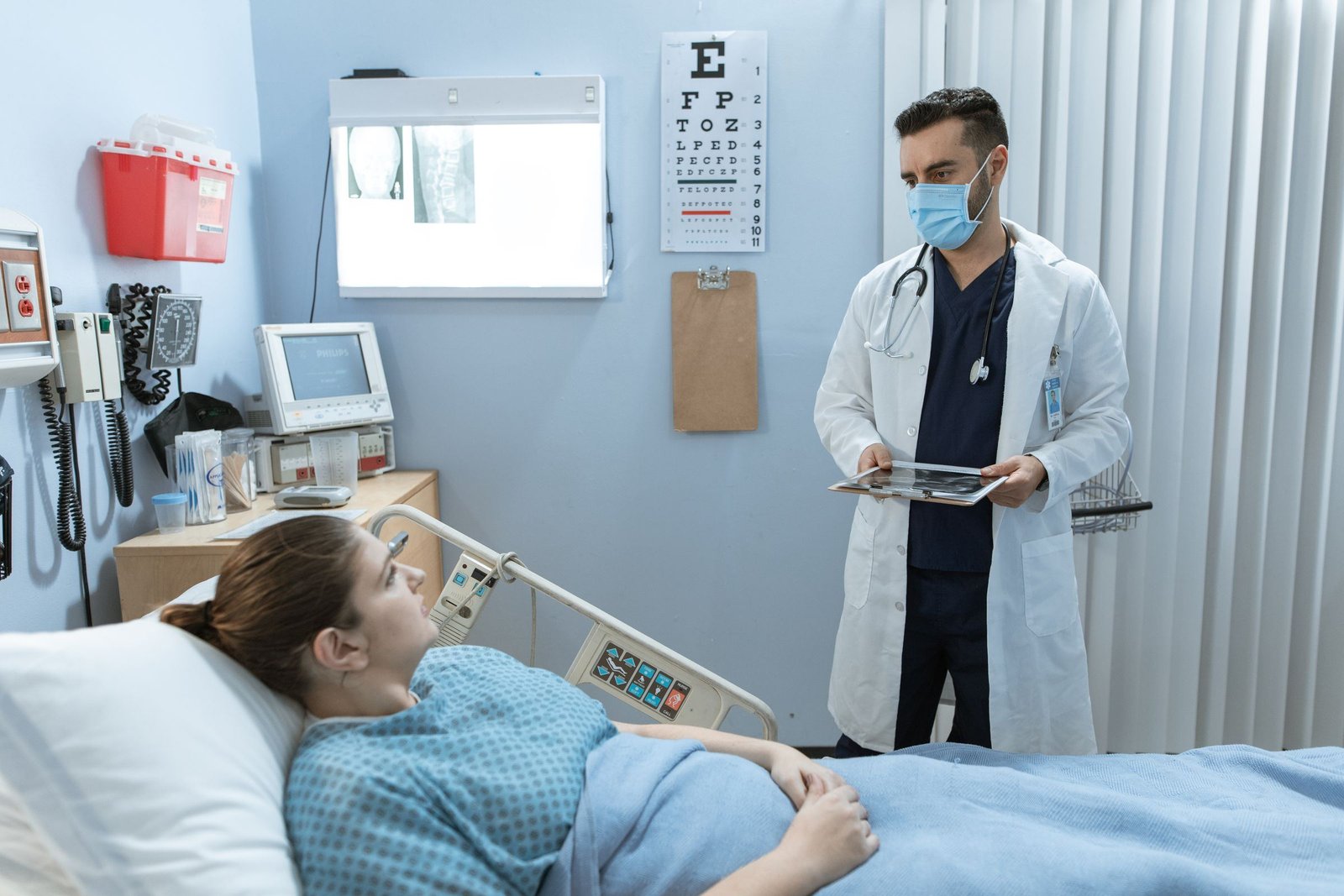


Clinicians use a level of care assessment for opioid use disorder to find the right fit. They look at your health, safety, and mental state. Withdrawal needs and your support system are part of the check. No single score makes the final call.
The aim is to fit care to what you need. Outpatient services might be the right fit. Residential treatment could also be the answer. At times, you may need hospital-based care.
This check gives a care recommendation. It does not force you into inpatient rehab. Insurance coverage is not guaranteed either. See our guide to opioid rehab options for more on treatment settings. If you are considering a shorter stay, our guide to weekend rehab for opioids covers safety steps and ongoing care.
We act as a U.S. treatment directory publisher. We do not offer care. If you think someone is overdosing, call 911 now.
Opioid Addiction Level of Care Assessment: The Process
Your placement is not set by a quiz or a score. Only a clinician can make that choice. They use a level-of-care assessment to fit treatment to you. This check covers your safety and health. Then the clinician suggests the right setting.
6
dimensions used in the ASAM Criteria for a holistic assessment[1]
Each of these numbers has a specific job. Diagnosis names the condition you have. Assessment picks the right care level. The ASAM Criteria use six dimensions to look at your whole health.[1] This helps plan your services.
Clinicians check many areas during an opioid addiction level of care assessment. They look at your physical health and any past overdoses. They also check for withdrawal risks and mental health issues. Your opioid use patterns are reviewed too. Past care and home life matter as well. Finally, they listen to your goals and wishes.
Treat assessment, diagnosis, and insurance as three different parts. The assessment looks for the safest level of care. The diagnosis shows you have an opioid use disorder. Insurance is a separate step that checks what your plan pays for. This split helps you ask good questions at your visit.
Opioid Level-of-Care Assessment: What to Expect
An opioid level-of-care assessment is a conversation plus a health check. There is no passing or failing. The aim is to match you with the right care.

- Tell them why you are here. Share what made you seek help. This could be a recent event or a long struggle.
- Review your history. Talk about your opioid use and health. Clinicians look at the whole picture to plan care.[2]
- Check for safety needs. Discuss risks like overdose or withdrawal. Also talk about your support system and goals.
- Ask about the plan. Ask why they picked this level of care. Ask what other options exist if this does not fit.
Share everything when you talk. A drug test is only one piece of the data. The results should match your full health picture. They do not stand alone as a reason for a call.[3]
What to Share at an Assessment
Your ticks are saved on this device only.
Opioid Treatment: Inpatient and Outpatient Options
Your safety risks, home support, and needs all shape the pick between inpatient and outpatient care. No one level of care fits every person. Your assessment results help point you to the right setting.
Below, a table shows how common care settings compare. Services and terms vary by program. Ask every facility about the services it offers. Also ask what clinical needs they can support.
| Setting | Where Care Happens | General Structure & Supervision | Typical Purpose |
|---|---|---|---|
| Standard Outpatient | Lives at home; attends visits at a clinic or program | Weekly or bi-weekly visits; low supervision | Maintaining recovery; managing mild symptoms; continuing care after higher levels of treatment. |
| IOP / PHP | Lives at home; attends daytime sessions at a clinic or program | Several hours a day, several days a week; group and individual therapy | Intensive support without leaving home; bridging the gap between residential care and standard outpatient care. See partial hospitalization for opioids or intensive outpatient programs for details. |
| Hospital-Based Inpatient | Lives in a hospital | Round-the-clock medical oversight by clinical staff | For individuals requiring management of serious health issues, severe withdrawal symptoms, or complex medical needs that require constant monitoring. |
Check each program's protocols when you compare options. Facilities do not always use the same labels or service mixes. Clarifying these details helps you know exactly what support you will get during your stay or visits. Confirm if the program supports continuing prescribed medications for opioid use disorder, like buprenorphine or methadone, since availability varies by facility. Our guide to how to compare rehab programs lists the specific questions to ask when vetting your options.
Opioid Care Levels and Level 3.7
ASAM sets levels of care to match service type and intensity to a person’s assessed needs. These levels do not rank program quality.[4] Six dimensions guide the assessment and service planning in the ASAM Criteria.[1] The adult Fourth Edition came out in 2023.[5] Check ASAM’s official site for the latest edition.

Care sits on a continuum of intensity in the ASAM framework. It moves from low-intensity outpatient services to high-acuity medically managed inpatient care. Specific service details may shift a little by edition, but the general flow includes:
- Outpatient Services: These levels allow a person to stay at home. Treatment is structured and ranges from basic counseling to intensive outpatient programs (IOP) and partial hospitalization programs (PHP).
- Residential/Inpatient Services: You live at the treatment facility for these levels. Settings range from lower-intensity residential care to higher-intensity medically monitored areas.
Level 3.7 is a specific ASAM level of care.[6] The ASAM Criteria call it Medically Monitored Intensive Inpatient Services. This differs from Level 4, Medically Managed Intensive Inpatient Services.[7] This term comes from the cited materials. The Fourth Edition may use different words. Verify the exact current title with the program or ASAM resources. A level name alone does not show the setting or services at a specific program. Ask the program to explain if care is residential or hospital-based and what it provides.
Questions if a Referral Says Level 3.7
Your ticks are saved on this device only.
Treatment Settings for Opioid Use Disorder
Picking a place for care is separate from picking how you get treated. You may choose residential, hospital-based, or outpatient care. That choice does not decide if you use medication treatment for opioid use disorder. Both are separate parts of your plan.
Methadone, buprenorphine, and naltrexone are the three FDA-approved medications for opioid use disorder.[8] Your care team can go over which option fits you best. Outpatient settings can provide medication treatment for opioid use disorder.[9] You can live at home and get medication support. You can also join other services at the same time.
The mix of options changes based on the setting. In outpatient care, like intensive outpatient programs or partial hospitalization for opioids, you usually get therapy and meds while living at home. Buprenorphine is often the easiest drug to find there. Methadone access may be limited to certain clinics because of rules. Naltrexone is generally found in outpatient care but needs a drug-free break first. In residential or hospital-based care, all three drugs may be available. This allows for more flexible care during changes. Rules and access can differ by program and spot. Your placement level does not automatically pick your medication. Your provider will help you find the right mix for your needs.
Managing withdrawal is only the beginning. NIDA says medically supervised detoxification is rarely enough on its own.[10] It helps with acute physical symptoms. However, it does not cure long-term addiction. A complete plan requires ongoing care to help you remain healthy. To learn the length of the first phase, read about opioid detox duration. Our guide to opioid detox duration explains the factors that shape how long that first phase typically lasts.
How Your Level of Care May Change Over Time
You do not get stuck in one level of care. Your needs can shift as time passes. You may move to a setting that is more or less intense. Your safety, health, and support drive this change. No one set treatment length works for every person with a substance use disorder.[11]

See this process as a series of checks. It does not follow a strict schedule. Here is what it often looks like:
Initial assessment
You and the team check your needs. You agree on a recommended level of care.
Treatment begins
You start in the chosen setting. You set specific goals and a support plan.
Progress reviews
The team checks your progress often. They watch how your needs shift over time.
Care adjustments
You and the team talk about next steps. You may stay, step down, or get more support.
Transition planning
If you move settings, the team makes a plan. This ensures ongoing care and follow-up.
Each person follows their own path in treatment. This timeline outlines the reassessment steps. It does not guarantee a set order or duration.[11] Ask which signs prompt a placement review. Also ask how care is managed when you change settings. Grasping how treatment placement is assessed can make you feel more in control.
Do not give up if you use opioids again after treatment ends. Reach out to your care team instead. Discuss what occurred and ways to change your plan. Opioid treatment levels of care can flex. They are built to support you through different stages of recovery. For details on finding stable housing once you leave, our guide to sober living after opioid rehab explains your options.
Important safety note: Your body may be more sensitive to the drug after a break from opioids. Carry naloxone with you at all times.[12] If you suspect an overdose—signs include slowed or stopped breathing, inability to wake, and blue or gray lips or skin—call 911 immediately.[13]
Possible Opioid Overdose: Get Emergency Help
These signs in a person right now signal a medical emergency. Possible opioid overdose signs include slowed or stopped breathing, inability to wake, and blue or gray lips or skin.[13] Do not wait to see if they get worse.
- Call 911 immediately. Tell the dispatcher that you suspect an opioid overdose.
- Give naloxone if you have it. Naloxone can reverse the effects of an opioid overdose.[12] Follow the product directions on the package and the 911 dispatcher’s instructions.
- Support breathing and stay with the person. If the person is not breathing or is only gasping, keep them on their back and follow the 911 dispatcher’s instructions for rescue breathing or CPR. If the person is breathing normally, place them on their side if possible. Stay until emergency responders arrive.
Being on the safe side is always best.Call 911 even if naloxone appears to help, and stay with the person until emergency responders arrive. If you are unsure whether someone is overdosing, call 911 anyway.
Ready for Your Next Move
The ASAM Criteria use six dimensions for a holistic, biopsychosocial assessment that supports service planning across services and levels of care.[1] A level designation describes the type and intensity of services matched to assessed needs, not a ranking of program quality.[4] Ask how a recommendation reflects your assessed needs, what services are included, and how the plan can be reviewed as your needs or response change.[14]

Bring these questions to a talk with a qualified provider. Remember, they do not give you a diagnosis. Nor do they assign a level of care.
Questions to Prepare for Your Next Step
This self-check is for information only and isn't a diagnosis.
If you have an emergency, do not use this self-check. If you or someone else has any danger signs described above, call 911 or go to the nearest emergency room now. For suicidal thoughts, call or text 988.
Frequently Asked Questions
What are the 5 levels of care for substance abuse?
There is not one universal five-level system used by all programs. The ASAM Criteria, Fourth Edition for adults, organizes assessment using six dimensions to create a holistic, biopsychosocial assessment for service planning and treatment across all services and levels of care.[1] These numbered levels describe types and intensity of services matched to assessed needs, not a simple ranking of program quality.[4]
Broad settings such as outpatient, residential, and hospital care are distinct from these specific ASAM level designations.
What is a 3.7 level of care?
Level 3.7 is an ASAM term for Medically Monitored Intensive Inpatient Services.[7] It is different from Level 4, which offers Medically Managed Intensive Inpatient Services.[7] This number shows the type of medical care, not how sick a person is. Ask your provider to explain the difference between Level 3.7 and Level 4.
Does opioid addiction treatment always require inpatient rehab?
No, you do not always need inpatient rehab. The right setting depends on your needs and safety at home. For some people, intensive outpatient treatment works well instead of inpatient care. Your assessment will help pick the best fit for you.
Can my level of care change during treatment?
Yes, your level of care can change over time. NIDA says plans should be checked often as needs change.[14] Talk to your team if your situation shifts. They may keep you at the same level or move you to more or less support.
What does a 7 opioid risk score mean?
Different tools measure different risks or pain histories, and the meaning of a specific number depends entirely on the instrument used. Identify the specific tool your clinician used and ask them directly what a score of 7 means in that context. A pain score does not set your level of care for addiction treatment.
What is considered a high MME?
MME compares prescribed pain-medication doses and is not a measure of opioid concentration in the body. The CDC advises clinicians to carefully reassess evidence of individual benefits and risks when considering opioid dosages of 50 MME per day or more.[15] This is a pain-prescribing caution, not a universal safe-dose cutoff or a threshold for addiction treatment placement. If you have trouble breathing or are very sleepy now, call 911 or go to the ER right away.
What are the 5 C’s of addiction?
The "5 C’s" is an educational shorthand often used to describe characteristics of substance use disorders, typically including Compulsion, Consequences, Craving, Control loss, and Continuation despite harm. These are not a diagnostic or placement tool. Diagnosis relies on clinical criteria, such as those in the DSM-5.[16]
What are the three classifications of opioids?
Opioids are generally classified as natural (such as morphine), semi-synthetic (such as oxycodone), or synthetic (such as fentanyl). This classification describes the drug’s origin and potency, not a person’s level of care. Classification does not determine treatment placement.
What are "opioid levels"?
The phrase "opioid levels" is ambiguous. It can refer to the class or potency of a specific opioid medication, or it can refer to the concentration of opioids measured in the body through toxicology testing. If you are asking about a lab result, remember that test results should be interpreted in clinical context rather than used as the sole basis for a decision.[3] If you suspect an overdose, look for signs like slowed or stopped breathing, inability to wake, or blue or gray lips or skin, and call 911 immediately.[13]